10 Questions to Ask Before You Hire a Graphic Recorder/Visual Note-Taker
- Lindsay Wilson
- Updated: October 1, 2026
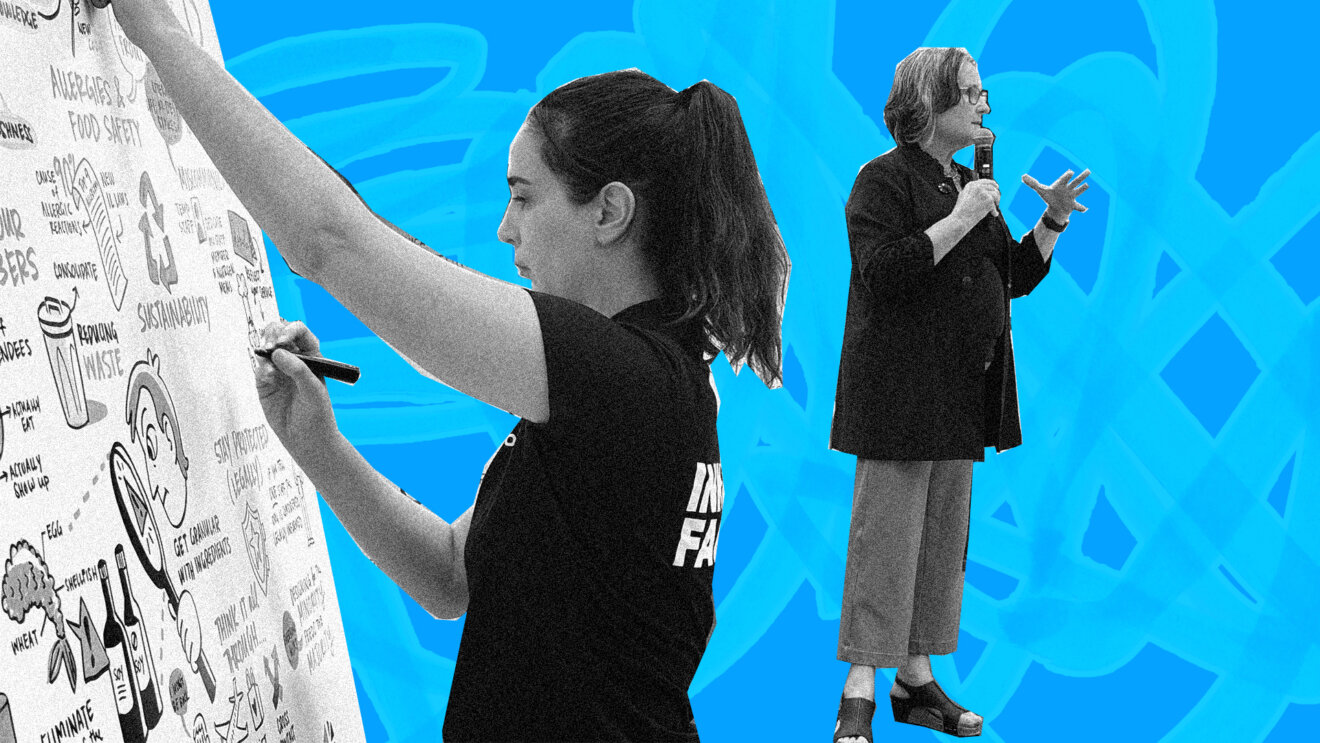
If you’re bringing live visual note-taking to your next conference, offsite, or board meeting, the artist you book is the difference between “wow, everyone’s talking about this” and a rushed sketch nobody remembers by Monday. Before you sign anything, ask these ten questions.
Questions About the Artist's Experience & Approach
1. How long have they been doing this, and how did they learn?
The short answer: Experience is essential
Real-time visual synthesis (listening to a speaker, pulling out the actual idea, and drawing it clearly before the next sentence starts) is a skill that gets sharper with reps. Ask how the artist trained: formal art background, an apprenticeship inside a studio, or fully self-taught on the job. There’s no single “right” path, but you want someone who’s done this enough times to stay calm when a speaker goes off-script or talks twice as fast as expected. At events, things go wrong. It’s inevitable. Someone who’s dealt with hiccups before is someone you want on your team.
2. What's Their Creative Philosophy?
The short answer: Ask which one they lean toward, because it changes what you’ll get.
Some artists prioritize capturing everything: a thorough, text-forward record of the discussion with supporting imagery. Others prioritize visual impact: bold, distilled imagery that captures the feeling and key idea of a session over a complete transcript. Neither approach is better; they’re built for different goals. A training session usually benefits from a content-heavy approach people can actually study afterward. A keynote or brand moment usually calls for something bolder and more visual. Ask the artist which they lean toward, and make sure it matches what you actually need.
3. How do you approach a full day of sessions? One large summary visual, or one per session?
The short answer: This decision affects your budget, your wall space, and what attendees actually take home.
A single large-format mural can synthesize an entire day into one dramatic piece, great for a hallway centerpiece or a highlight-reel recap. Individual boards per session give each speaker or breakout its own shareable asset, which matters if different teams want to reference or repost their specific content. Ask how the artist typically structures a multi-session day, and whether that structure fits how your agenda is organized.

4. What materials do you work with, and what size are the finished visual notes?
The short answer: Get specific on dimensions and medium before you finalize your room setup.
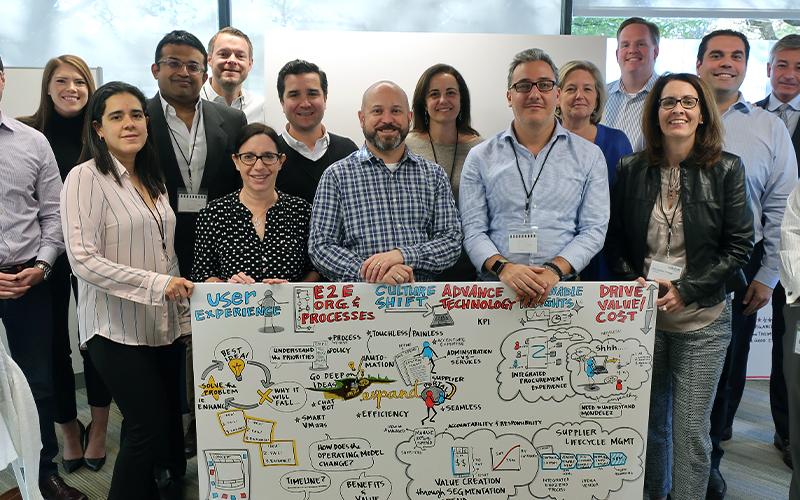
Sizes range from notebook-scale sketches for an intimate boardroom meeting to large-format paper (often four to six feet or more) for a stage-facing conference board. Materials matter too: traditional marker-and-paper work looks and displays differently than tablet-based digital drawing. Some artists prefer to work on paper for its portability, and others prefer to work on foam boards for their professional look and ability to be combined into impressive structures. Ask how big the final artwork will be and what it’s made on, then map that against your room size, audience count, and whatever you’re planning to do with the artwork afterward.
5. Will the visual notes be finished live, or refined after?
The short answer: Ask directly, because “finished” means different things to different artists.
Some artists complete the board in real time, wrapping the moment the session ends, ready to photograph and share immediately. Others capture a rougher version live and polish it afterward (inking, coloring, cleaning up type) before the final deliverable. If engaging people the day of the event is your goal, make sure the artist can do the former. Ask which timeline they use, and if it’s the latter, how long that turnaround actually takes.
6. What am I responsible for?
The short answer: Ask directly, because “finished” means different things to different artists.
Some artists complete the board in real time, wrapping the moment the session ends, ready to photograph and share immediately. Others capture a rougher version live and polish it afterward (inking, coloring, cleaning up type) before the final deliverable. If engaging people the day of the event is your goal, make sure the artist can do the former. Ask which timeline they use, and if it’s the latter, how long that turnaround actually takes.

Questions About Their Process
7. What happens if the agenda changes day-of?
The short answer: Ask how they adapt, not just how they prepare.
Agendas shift. A speaker cancels, a panel runs long, a breakout gets moved. Ask the artist directly how they handle it. Can they reorganize on the fly, or is their plan locked in once it’s set? This is where experience (see Question 1) really shows up. An artist who’s only ever worked from a fixed script will struggle the first time reality throws a curveball. A seasoned pro reads the room and adjusts without missing a beat.
8. What happens before event day?
The short answer: The best visual note-taking partners collaborate with you well before they pick up a marker.
Great visual notes don’t come from an artist guessing at your agenda in real time. They come from understanding your goals, your speakers, and your key terminology in advance. Ask what their prep process looks like: Do they request an agenda? Talk through your objectives? Build a visual vocabulary ahead of time so they’re not improvising your CEO’s name mid-keynote? If the answer is some version of “we just show up,” you’re hiring entertainment, and entertainment ends when the event does.
Questions About the Team and What You'll Get
9. How many artists are on the team (and what's the backup plan)?
The short answer: If they can’t answer this without hesitating, keep looking.
Many practitioners of visual notes are sole proprietors.That’s fine, until your artist gets the flu the week of your conference and you’re scrambling for a replacement (or worse, without one at all). Ask directly: is this a full-time team, or a single freelancer subcontracting when they’re overbooked? A real studio has full-time artists on staff, not just a rotating cast of contractors, which means there’s always a qualified backup and someone who can scale up if your event grows bigger than planned.
10. What will I actually walk away with?
The short answer: Ask for specifics on formats, timelines, and usage rights.
This is where a lot of vendors get vague, and vague is a red flag. You want clear answers on:
- Deliverable formats — high-res digital files, physical boards, both?
- Turnaround time — same day, next week, a month later when nobody remembers why they needed it?
- Usage rights — can you use these visuals in a recap email, on social, in next year’s pitch deck?
- Scope limits — is there a cap on the number of boards, or does it flex with your actual agenda?
A one-and-done sketch that dies in someone’s camera roll isn’t worth the investment. The visuals should keep working for you for months after the event ends — as recap content, sales collateral, or onboarding material.
Quick Answers to a Few More Questions
What’s the difference between graphic recording and visual note-taking?
There’s actually no difference. We go over confusing industry terms in this article.
How far in advance should I book a graphic recorder? 30 days out gives enough runway for a proper prep process. The earlier you loop your artist in, the better they can prepare.
How much does hiring a graphic recorder cost? Rates vary widely based on team size, event length, materials, and deliverables: a solo freelancer for a two-hour session costs very differently than a full-time studio team for a full-day conference with large-format physical boards. Ask for a breakdown of what’s included so you’re comparing apples to apples.
The Bottom Line
Hiring a graphic recorder shouldn’t feel like a leap of faith. Ask these ten questions, get real answers, and you’ll walk into event day knowing your ideas are in good hands.
Ready to see what creative genius looks like? Explore our visual note-taking services or get in touch to talk through your event.

Lindsay Wilson
Don't tell, show.
LET'S GET STARTED.


Visuals make it easier to communicate problem solve, and motivate people to take action.
Let us help you figure out how.
You won’t regret it
